6.21.2011

To Strawberry Ice Cream, With Love

It has happened.

I’ve had plenty to say about lentils and garlic scapes. I’ve been filled to the brim with musings on bran muffins and mushroom flatbread. And now I can’t find a thing to say about strawberry ice cream. I’ve totally blanked. Stymied by ice cream.

Anne Lamott, in her book Bird by Bird, recommends when you are suffering from writer's block—when the words just aren’t flowing (and perhaps after you’ve freaked out and thrown stuff)—to sit down and write a letter to a mother, a son, or a childhood friend. I realize Lamott likely didn’t mean to suggest a note composed to an ice cream flavor, but in a way strawberry ice cream is like a long lost companion. And so I begin ...

My dearest strawberry ice cream,

I blame you, in all of your innocence, for my confusion with how to deal with you. You’re a frozen slurry of hope, simplicity, and sadness. Like a well worn one-eyed teddy bear, in dessert form.

You’re a cannon ball into the beginnings of summer. You remind me of balmy nights chasing fireflies just after dusk. Of putting on the screen doors for the season. Thinking of you opens up the shutters and lets the fresh air in. As I write this, I find myself humming “Summer Breeze” by Seals and Crofts. You’re blowing through the jasmine in my mind.

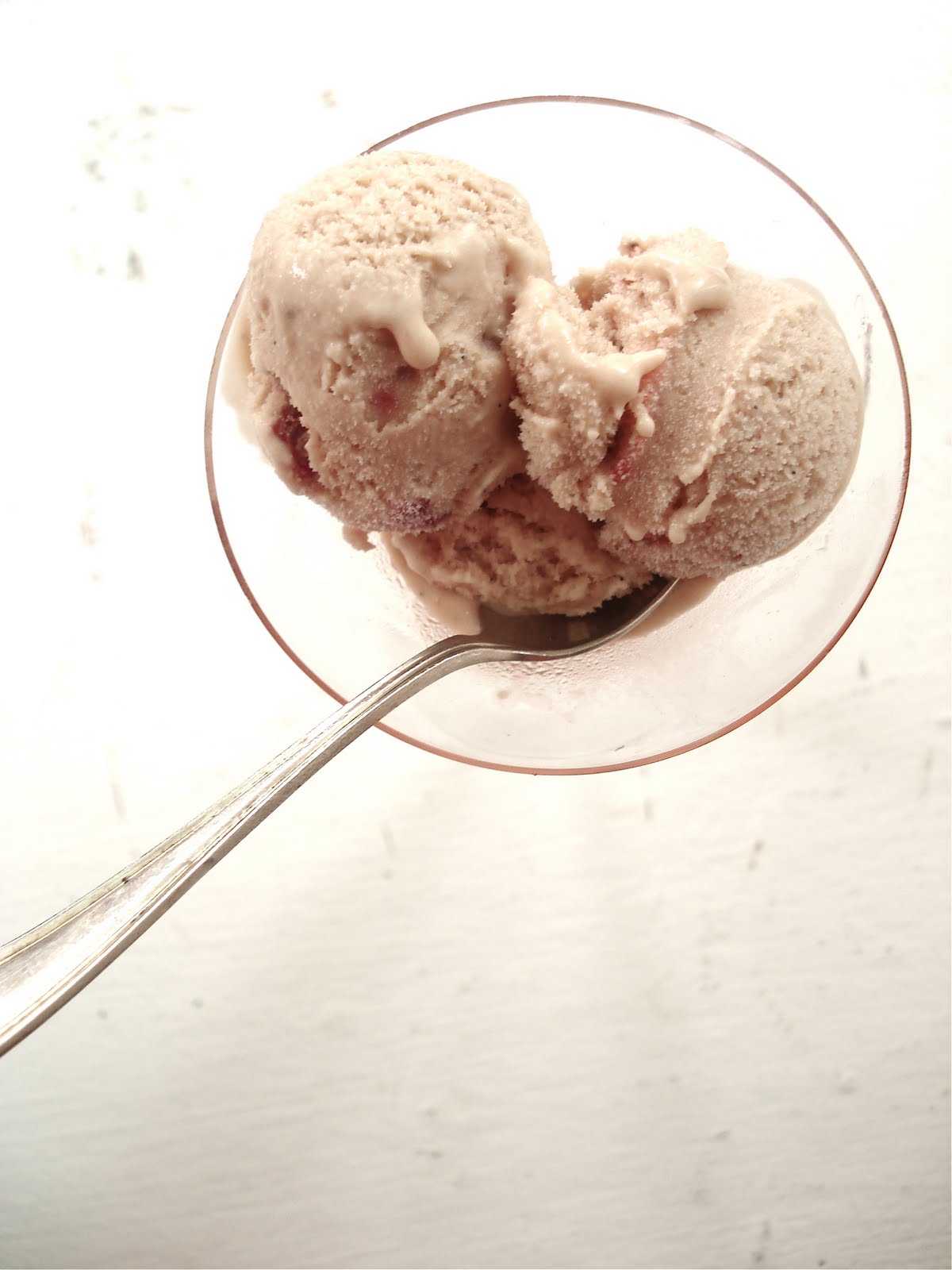
But also, you don’t try to pretend to be something you’re not. What you see is what you get: a light pink hue with bright strawberry bits that have sat stewing in their own juices before being mixed into cream sweetened with sugar. Some may view you as boring. But you’re more classic than clichéd.

I feel bad for you too. You’re often a cast away, the left behind flavor in Neapolitan ice cream and overlooked by most anyone past the age of eleven. Saying this now makes me realize you’re probably in need of a good therapist. You’d likely benefit from spending some time discussing your inner demons lying down on an oversized sofa. I know you have some. You’re nestled in many childhood memories, where adult-sized problems often begin. Like it or not, you probably come with some baggage.

But it’s okay. You represent flip flops and the dreams of summers past. You’re adored by tattered sentimentalists and are eaten by adults with youthful hearts. So I will think of you fondly, for always.

With sugar cones and spoons,

Emily

Strawberry Ice Cream

1.25 cups whole milk
2 cups heavy cream
1 vanilla bean, split with seeds scraped out
8 egg yolks
3/4 cup honey
~1/4 cup sugar (plus additional depending on the sweetness of your berries)
~1.5 pound strawberries, cleaned and stems removed
Pinch of salt
2 tbsp lemon juice
1 tbsp rose water
~1/4 cup framboise

In a medium saucepan combine milk and cream; add the vanilla bean seeds and pod and cook on medium heat until bubbles start to form around the edges of the pan, being careful not to let the milk burn. Remove vanilla bean pod.

Meanwhile, in a medium bowl, whisk the egg yolks and add in honey and sugar. When the milk and cream mixture has started to bubble, as mentioned above, slowly add the hot liquid to the egg mixture, whisking in a little at a time to make sure the eggs don't start to curdle. Once fully combined, return mixture to the stovetop and heat on medium, stirring constantly until the mixture thickens and coats the back of a spoon (about 6-7 minutes).

Remove the mixture from heat, strain through a fine-mesh strainer into a bowl, and set aside. Blend 3/4 of your strawberries in a food processor and then strain out the pulp; add strawberry puree to the cream base, along with the pinch of salt. At this point, you may want to taste the mixture again and whisk in additional honey, if needed. Quarter the remaining strawberries and combine with lemon juice and rose water. Place both the quartered strawberries and strawberry ice cream base in the fridge to cool, ideally overnight.

After mixture has cooled, freeze the strawberry ice cream base according to your ice cream maker's instructions, (typically this takes about 30 minutes).* Meanwhile, strain out any juice the quartered strawberries have released. About half way through the freezing process, add the strawberries and about 5 minutes before the ice cream is done, add in the framboise. Place in the freezer to finish the ice cream hardening process, ideally 2 hours or more.

Makes about 1.5 quarts

Notes:
-*Though I froze this mixture all at once, I'd recommend freezing it in 2 batches if you can. It will freeze better with less mixture.

-The framboise helps to deepen the berry flavor, while also helping the ice cream remain softer in your freezer.

6.12.2011

Nutmeg Spice Cake To Have and To Hold

It’s official, summer wedding season is on. I hosted an engagement party for two dear friends last week and I’m still recovering from my sister’s bachelorette Florida getaway the past weekend. Already, certain themes for this series of matrimony have emerged. Lifelong happiness? The need to shun sweets to squeeze into a dress?

No, for me the theme is ice cream. And cake. Paired with booze. This is entirely my issue. And I have to live with that.

In my defense, I hadn’t planned on my sister’s bachelorette dinner in Daytona being so dismal that it forced forgoing the final course: our party—instead—opting for a taxicab ride to the Winn Dixie for dessert, etc.. I hadn’t planned on washing down a gallon of ice cream with plonk at midnight on a beach vacation. Flash to me with a bottle of cheap Riesling in one hand and a tub of Rocky Road in the other.

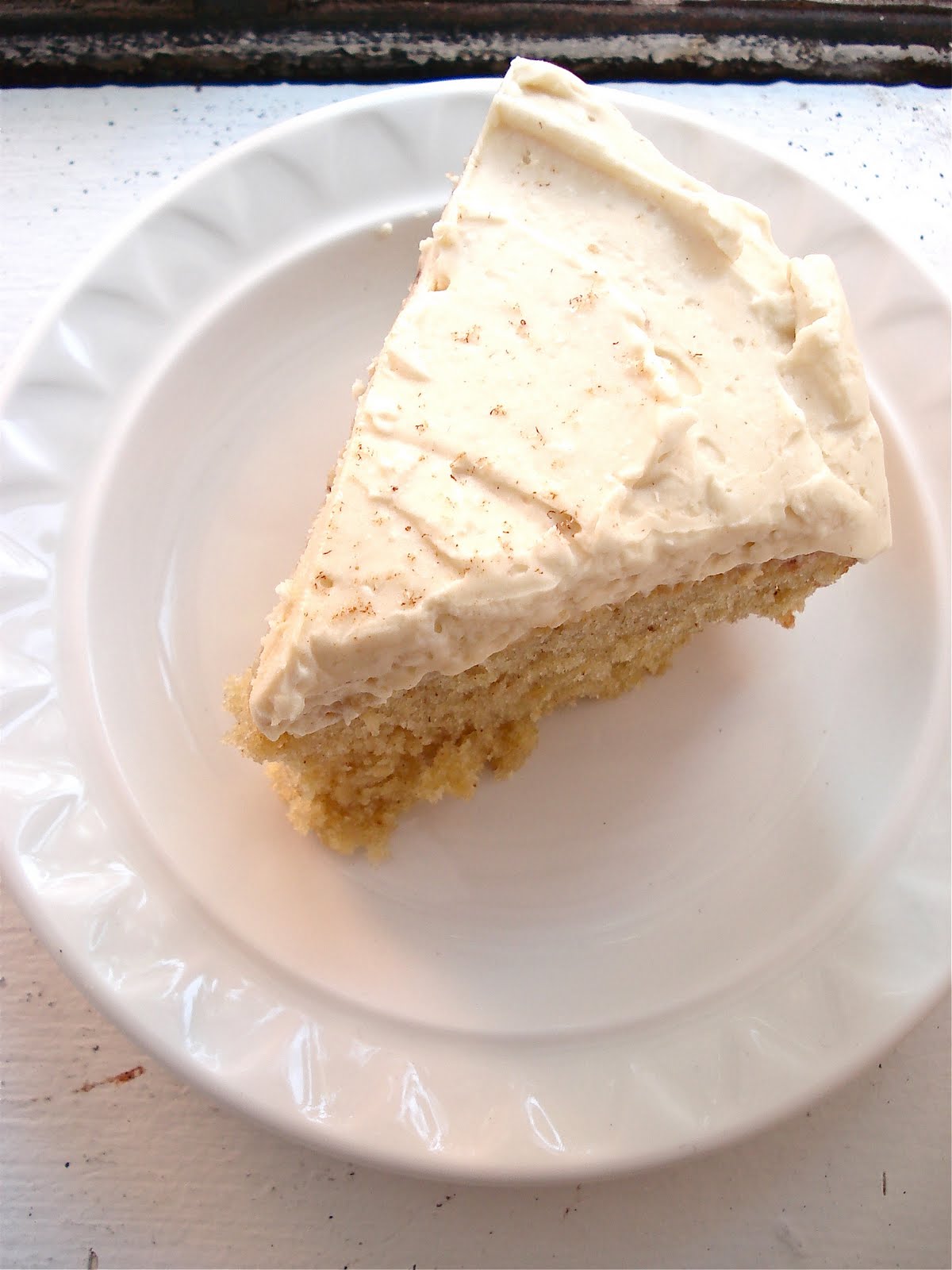
On a more successful dessert fête, my friends’ engagement party on my patio featured a buffet of homemade ice cream, paired with a number of fizzy alcoholic beverages for an adult ice cream float fest that would have made Bacchus proud. And there was cake. Specifically, nutmeg spice cake with a rum meringue buttercream.

While cocktails + ice cream is good—and sometimes a necessity—booze with cake is better. This will forever be true for me. And it likely explains why I have such strong feelings about wedding cake. (Read: + open bar.)

I now sit with a leftover slice of cake and can’t help but think how mind-blowing it would be to wash it down with some brandy. The cake itself is like reincarnated eggnog. Each ethereal bite is a cakey reminder of the special occasion cocktail I hold near and dear to my heart.

With this dessert, two souls become one. It’s the perfect marriage of innocence and depravity, a fluffy, moist cake, wrapped in a meringue buttercream and tucked in with a nip of rum. It’s not overly showy, nor is it overly complex to create, but it’s a recipe worth hanging on to all the days of your life.

This cake is patient, this cake is kind. It does not envy, it does not boast, it is not proud. It is nutmeg and rum together, in arguably their finest hour.

So I, Emily, take you, nutmeg cake, to be my pastry partner. And with this fork, I thee eat.

Nutmeg Spice Cake with Rum Meringue Buttercream

Adapted from Joanne Chang's cookbook Flour: Spectacular Recipes from Boston's Flour Bakery + Cafe

1/4 cup unsalted butter, at room temperature
1/4 cup olive oil
1.5 cups sugar
1 tsp vanilla extract
3 eggs
2 cups flour
1 tsp baking powder
1/2 tsp baking soda
1-1/4 tsp nutmeg, freshly grated
1/4 tsp cinnamon
1/4 tsp cloves, freshly ground
1/4 tsp ginger
1/2 tsp kosher salt
1 cup buttermilk, at room temperature

Rum Meringue Buttercream
1.5 cups sugar
6 egg whites
1.5 cups unsalted butter, at room temperature
1 tsp vanilla extract
1/4 tsp kosher salt
4-8 tbsp dark rum (to taste)

Preheat oven to 350 degrees. Butter and flour two 8 inch cake pans (if making a layer cake) or one 9 inch pan. In a stand mixer with paddle attachment, beat butter and oil for about 1 minute. On medium speed, slowly add in sugar and vanilla and beat until light and fluffy (about 2 minutes). Add eggs one at a time and beat until well combined.

In a medium bowl, sift flour, baking powder, baking soda, spices and salt. Add about a third of this mixture to creamed mixture above and mix until just combined; add half buttermilk, mix briefly; scrape down sides of bowl to incorporate all of mixture. On low speed, add half of remaining flour mixture and then the remaining buttermilk. Add remaining flour mixture and mix until just combined. Pour into prepared cake pan(s).

Bake cake in the middle of your preheated oven for 30-40 minutes.

To make the buttercream, in a small heatproof bowl, whisk sugar and egg whites together. Place a small amount of water in a saucepan big enough to allow your bowl to fit in it. When the water is simmering, place the bowl with the sugar and egg whites over the water; ideally, the bowl should not be touching the simmering water. Whisk the mixture for 6-8 minutes or until the mixture is hot to the touch.

Pour mixture into the bowl of a stand mixer and whip on medium-high speed for 6-8 minutes, until it becomes a light, white meringue. Turn the speed down to low and add the butter at 2 inch chunks and mix for 2-3 minutes. If the mixture looks curdled it will eventually smooth out, you may need to beat it for a few more minutes.

Add vanilla, salt and 4 tbsp of the rum and whip for an additional 1-2 minutes. Taste and add additional rum until desired, whipping briefly to incorporate.

Frost cake. Dust with additional freshly grated nutmeg. Eat cake.

Serves 8-12 (this depends on the size of your slices and the amount of spirits you've consumed)

Notes:
-The buttercream can be refrigerated for a few days if you aren't using it immediately; out of the refrigerator, beat for about 10 minutes before frosting. (Frosting may separate, but it will come together again.)

-If you happen to have leftovers of this cake, it will freeze brilliantly (even frosted), allowing you to eat it at midnight should that tickle your fancy.

-This is the stuff dessert dreams are made of. Nutmeg is also said to be an aphrodisiac. I'm just sayin' ...

-Ironically, the pastry chef that came up with this dessert at Flour was making it for a friend's wedding.

6.02.2011

Salted Butter Caramel Ice Crème de la Crème


If I could borrow from Sinatra: nothing but the best is good enough. I'm not talking Lincolns or lobsters from Maine. A bullfight in sunny old Spain would be nice, but I'm not sure it would beat out salted butter caramel ice cream. This is sweet caramel on caramel action. The crème de la ice crème.


If you've ever loved ice cream. If you've ever felt you've needed it at all. If you've ever had a broken heart. Found a goldfish belly up. Been in a hot pant for an ice cream float.


If you've ever possessed, at one time or another, strong views on deep, dark caramel. If you like the crunchy candy bits in butter crunch ice cream. Then this is the ice cream to keep in reserves.


And it's taken directly from David Lebovitz's playbook. An American pastry transplant living in Paris, Lebovitz knows his way around the sugar bowl. And for those familiar with the legendary Berthillion ice cream in the city of lights, Lebovitz asserts that his version is better than their famed glace caramel.


A dangerous statement. (With this he may as well be a matador; ice cream lovers, like bulls, can get pretty roused.) Luckily, boy does he deliver as promised.


For those that think butter has been overplayed. For those that think salted desserts are o-v-e-r. Think again. They aren't. They're timeless. Like Sinatra. And salt.


So tally-ho. Off we go. You and me, on an ice cream spree. Let's get started. Right away.


Salted Butter Caramel Ice Cream
Adapted from David Lebovitz

Crunchy caramel bits
1/2 cup sugar
3/4 tsp sea salt (fleur de sel)

Ice cream
2 cups whole milk, divided
1.5 cups sugar
4 tbsp butter
1/2 tsp sea salt (fleur de sel)
1 cup heavy cream
5 large egg yolks
1 tsp vanilla extract

Brush a sheet pan generously with butter. Spread 1/2 cup sugar on the bottom of a medium-sized saute pan. Heat on moderate heat until the edges of the sugar begin to melt; slowly spread melting sugar into the middle of the pan, towards the center, until sugar is dissolved. Continue to cook until the sugar deepens in color, until it starts to smoke and nearly starts to burn. Add in salt and quickly pour onto the baking sheet; shift and swirl sheet to spread out caramel. Let cool. Cover.

Meanwhile, make an ice bath with ice cubes and water in a medium bowl and place a smaller bowl on top of the bath. Pour 1 cup of whole milk into the small bowl and rest a mesh strainer on top. Place 1.5 cups sugar in a sauce pan and cook similarly as above, until caramelized. Meanwhile, place egg yolks in a small bowl and whisk until combined. Once sugar is caramelized, remove from heat and add butter and salt. When butter is melted, add in the cream. The caramel may seize, but continue to stir until any hard caramel that has formed has melted again. Stir in the remaining cup of milk.

Gradually pour small amounts of the hot caramel mixture into the egg yolks to gently heat. Once eggs have tempered, add egg mixture into caramel and cook until it thickens and registers 160-170.

Pour custard through mesh strainer and stir in with remaining milk. Refrigerate until cook, ideally overnight.

Freeze in an ice cream maker, according to instructions. It will generally take 20-30 minutes. While ice cream is freezing, break up the caramel on the baking sheet into small bits. At the very end of the churning add in the caramel pieces.

Notes:
-The high amount of sugar in this recipe means that it will stay slightly softened (and lovely) in your freezer so you don't have to let it thaw ahead of time.

-If you've ever had an adult ice cream float (or have wanted to have one), this ice cream is perfect with Guinness. I promise.

5.25.2011

In Rhubarb Kumquat Jam We Trust

I’m a believer in jam. I think a society that deals in filled and sealed jam jars as its currency is probably pretty happy as a whole. Swapping blueberry jam for boysenberry couldn’t possibly breed ill will. People would be too busy baking biscuits for smothering with fruit spread to worry much about a looming apocalypse or adulterous politico. In jam we trust.

Think about it. With jam everybody wins.

Rhubarb jam on toast on another unseasonably disagreeable day may feel as precious as gold when you’re at the breakfast table. And things have gotten pretty complicated for us here. So let’s slow down. Make some jam.

Homemade jam is a bottled season that you can open whenever you need a little pick-me-up. A reminder that there is still good that comes from the world turning and time passing. Yes, it is has been rainy and cool for weeks here, but I know its spring because I can see ruby red rhubarb. And when I talked to my mother yesterday she had just picked a few stalks to make some loaves of rhubarb bread. It made me homesick.

Yes, I had that kind of childhood. I grew up with loaves of quick bread and jars of homemade jam made with fruit picked by my house or from a nearby orchard we’d travel to in our minivan. So I have a sweet spot for the stuff. (Please note: I do not—nor will I ever—have a sweet spot for minivans. Especially maroon-colored ones.)

While my life isn’t currently filled with rhubarb plants and blackberry bushes in convenient proximity, having a steady supply of homemade jam certainly doesn’t hurt. It’s also entirely possible to pull off. For credibility with this, I point to The Blue Chair Jam Cookbook by Rachel Saunders. It’s divided into delicious seasons and features classics like East Coast blueberry jam, as well as pairings that place cardamom and orange marmalade together (at last!).

So I couldn’t resist when I found kumquats for Saunders’ rhubarb kumquat jam. The tiny oval-shaped citrus is a lovely counterpart to the rhubarb and the jam has enough sugar to soothe the face pucker that rhubarb often provides. This spread is pleading for a partner in the buttermilk scone department. But it’s also lovely eaten simply by the spoonful, sitting on a kitchen stoop. (Mine has definitely seen a fair amount of jam action going down recently.)

So if someone is selling a society based on jam, I’m buying. I’ll happily collect my rhubarb jam, pack up, and ship out. I’m certain this jam is better than a greenback: good for most debts, public and private, and far superior on scones.

Rhubarb Kumquat Jam
Adapted from The Blue Chair Jam Cookbook

3.5 pounds trimmed rhubarb stalks, cut into 2 inch chunks
6.75 cups sugar
5 ounces fresh lemon juice
3/4 pound kumquats, sliced into thin rounds and seeds removed
A few drops of orange blossom water

Day 1
Place rhubarb in a large non-reactive stock pot and pour sugar over it; add lemon juice and let steep for 24 hours at room temperature.

Day 2
Heat rhubarb on stovetop and add in kumquats, stirring well. Bring mixture to a boil, stirring occasionally. Continue to heat at a boil for about 20 minutes, stirring frequently and turning down the heat to prevent scorching, as necessary. Continue to stir the jam, almost constantly, for another 10 minutes or so to prevent it from sticking, until the jam has thickened.

To test for doneness, place a bit of jam on a spoon and put it on a plate in the freezer for a few minutes to see what the consistency of the jam will be like when cooled (you can also place the plate and spoon in the freezer ahead of time). When the desired consistency is reached (the jam shouldn't easily slip off the spoon) add the orange blossom water.

When your jam is done, pour into sterilized jars and process them for canning or simply place the jam in freezer-safe containers and store in your freezer, removing pints as needed.

Makes about 4 pints

Notes:
-Please note, this jam takes 24 hours plus to make.

-Saunders notes letting the rhubarb macerate for 24 hours at room temperature will help the rhubarb release its lovely juices.

-Whole Foods has orange blossom water, as will Middle Eastern grocers. You can always leave it out, but it adds a nice depth and subtle floral quality.

5.18.2011

Tamarind-Glazed Chicken That’s Like a Samba

I’m in the midst of a food fling. I’ve been making roast chicken for years, usually on top of carrots, onions, and potatoes; occasionally, I’ll throw in an apple or two. The cavity gets stuffed with lemons and butter and herbs are slipped under the skin. It’s an open-and-shut case of classic roast chicken.

It’s comforting. Consistent. Like the girl next door. And then, in walks the girl (read: chicken) from Ipanema. Bronzed, exotic, and as alluring as any bird could possibly be. (I want so desperately to throw in tall, tan, young, and lovely but such descriptors just don’t fit for poultry, try as I might.) Anyways, when you eat it, it’s like a samba.

Don’t get me wrong, traditional Sunday-style roast chicken is wonderful. It’s just that I’ve been in a bit of a cooking rut and so a simple roast chicken would simply not do. Yet, with this trade comes certain risk.

It’s a much flightier bird. The tamarind glaze could easily become too thick and sweet too fast on the stovetop. The heat of the serrano pepper could really sting. But the tamarind paste and resulting glaze that follows is worth the risk. It adds a haunting, soul-satisfying depth.

Tamarind itself has a special lure all its own. The paste is deep—almost black—garnet in color. It’s slightly sour, without being bracing; its fruit hails from a tree in the tropics. And it’s rumored to be given to elephants to make them wise. This quirkiness, coupled with its exotic appeal, tugs at my heartstrings.

And it was likely the magic behind the best roast chicken I’ve ever made. It almost feels like cheating. So I’m shacking up with a saucy new chick for now. People may talk. But the tamarind speaks louder.

Tamarind-Glazed Roast Chicken
1 red onion, cut into thick wedges
1 pound carrots, peeled and cut roughly into chunks
Olive oil
Salt and pepper
3-4 pound whole roast chicken
~1 tbsp butter
a few springs of oregano, thyme, or any other herbs you fancy
1 large orange, cut into quarters

1/3 cup tamarind paste
1/4 cup honey
2-4 tbsp brown sugar
2 tbsp fish sauce
Juice of 1 juice orange (or small orange)
2 garlic cloves, thinly sliced
1 serrano pepper, finely minced

Preheat oven to 425. Place the onions and carrots into a large roasting pan. Toss with olive oil (enough to coat and make the vegetables shiny) and season with salt and pepper. Place roast chicken on top of vegetables. Gently coax the top of the skin of the chicken away from the meat; rub butter underneath and add herb sprigs.

Insert orange quarters into cavity of the bird. Season top of bird with salt and pepper and add a little more olive oil to rub into the top of the bird. Tie legs together and place in the oven.

About 30 minutes after the bird has been roasting, boil about 1/2 cup water in a small sauce or saute pan; add tamarind paste and whisk with water until dissolved. Add remaining ingredients and cook on medium heat until mixture has thickened (about 5-10 minutes), whisking occasionally to prevent burning and tasting and adjusting for salt or additional brown sugar, as needed.

When paste is ready, take the chicken out of the oven and brush on tamarind glaze. Place back in the oven until the bird is fully cooked or registers 165 degrees (about 1 hr and 30-45 minutes). (You'll want to occasionally check to make sure the glaze isn't burning; if it starts to get a little charred simply cover the top with foil)

Makes 1 whole roast chicken, plus roasted carrots and onions

Notes:
-I used Tamicon tamarind concentrate that I found at Whole Foods.

5.10.2011

The Perfect Chocolate Chip Cookie (No Perfection Required)

I recently attended a “Coping with Stress and Adversity” conference. There we learned to “never say never, or always” and how to offer criticism by sharing a “star and a wish.” So when I saw this recipe I thought: now is the time.

I have never very rarely been able to follow a recipe precisely. Meticulously following directions tends to make me anxious. (Which should come as no surprise, considering the kind of conferences I frequent.) I can do it. But I don’t like it.

Before I bake, I take a few deep breaths, read the directions aloud, and wish for the best. Tried and true recipes require less meditation, but new recipes can unhinge me. Yet, when I saw these chocolate chip cookies, I decided to dig deep, follow the instructions, and shut up about it.

A classic recipe like chocolate chip cookies can evoke an added layer of stress, as there can be so much expectation, fond childhood memories even. You typically can’t please everyone. Some like thin, crisp cookies, while others like them soft and chewy. And then there are those that can’t commit and prefer to have it both ways (turns out, I’m one of those). Well, this recipe caters precisely to … umm, everyone.

I followed the directions perfectly (actually, I’m not sure if I’m still allowed to say perfectly after my seminar). Browning the butter was crucial and made the cookie dough reminiscent of toffee. The process was actually pretty therapeutic. What was not therapeutic: despite following the recipe with precision, I had cookies come out looking like they'd been steamrolled. When I retraced my steps I found baking soda that was "best by June 3, 2010."

Yet—and here’s the kicker—even flat these cookies are lovely. Nutty. Chocolately. Crisp and chewy. And if you follow the directions (which are not difficult, I might add) you’ll get fantastic cookies.

And, though I probably shouldn’t be advocating for the use of cookies as a 'coping mechanism' after the conference I just attended, I could swear having a cookie and milk moment brought my blood pressure down again. Now, I don’t know you, and I don’t know anything about your blood pressure, but my guess is that you don't have freshly baked cookies with milk nearly enough.

So here comes the star: bake these cookies and you’ll be a hero. The recipe is from Cook's Illustrated. They’ve done the heavy lifting and have written instructions that truly work. Their dough is divine chocolate intervention and their method is perfection.

As for my wish? I wish I had fresher baking soda. And also, more cookies. Always most days, more cookies.

Cook's Illustrated's Perfect Chocolate Chip Cookies

1-3/4 all-purpose flour
1/2 tsp baking soda*
14 tbsp unsalted butter (1-3/4 sticks)
1/2 cup sugar
3/4 cup dark brown sugar, packed
1 tsp salt
2 tsp vanilla extract
1 egg
1 egg yolk
1-1/4 cups chocolate, roughly chopped into chunks (or chocolate chips)

Position oven rack to middle shelf and preheat oven to 375 degrees. Line baking sheets with parchment paper. Whisk flour and baking soda together in a medium bowl and set aside. Then, heat 10 tbsp of your butter in a saucepan, swirling constantly, until butter is nutty and dark golden in color. Transfer melted butter to a large bowl; add in remaining butter and stir until the butter melts.

Add sugar, brown sugar, salt, and vanilla extract to melted butter and whisk until combined. Add egg and egg yolk and whisk until smooth and sugar is fully incorporated and without lumps (this should take about 30 seconds). Let mixture sit about 3 minutes, then whisk again for 30 seconds. Repeat this process 2 more times; the mixture will become smooth, thick and shiny.

Stir flour into batter until just combined. Then stir in chocolate. Scoop cookie batter into portions that are about 3 tbsp each. Bake cookies one tray at a time, rotating tray half way through baking, until the cookies are golden and their edges have begun to set but the centers are still soft, about 10-14 minutes. Transfer to wire rack to cool.

Makes 16 cookies

Notes:
-Warning! Baking multiple cookie trays at a time can cause uneven baking. (This is really good news if you only have 1 baking sheet due to the size of your tiny, tiny kitchen.)

-I still am not over this batter. It was a rich, caramel-wannabe cookie dough in its finest hour. The browning of the butter and use of dark brown sugar is spot on.

-For the chocolate I used half Taza's stoneground 70% dark chocolate (because I just love the stuff) and half Scharffenberger chocolate.

-For more info check out Cook's Illustrated's explanation.

-*Check the expiration date. I beg of you.

5.05.2011

Pain Perdu to the Rescue

It’s a dessert … it’s breakfast … it’s pain perdu. It’s one of the sexiest things you can make from bread. And if you didn’t know its potential, you might totally pass it by.

Literally translated as “lost bread,” it's often made from day-old slices thought to be of little use to society in their current state. But pain perdu is no lost moment. And it knows exactly what it’s doing: namely seducing with thick, buttery slices. But where pain perdu truly gets its oomph is with the addition of Cointreau. It's an important breath of boozy citrus, and definitely worth adding in.

It's also an easy way to feel quite pleased with yourself first thing in the morning. After all, it’s pretty much French toast, just a bit boozed and buttered up. Though, you still have to be careful. Yes, it's true I made this for breakfast ... on a Tuesday. But the self-satisfaction lasted precisely until I ran my fingers through my hair and realized I had honey in it.

This is an important lesson, folks. While pain perdu may be easy to make, one has to remember his or her personal Kryptonite. (Which, for me tends to involve sticky sweeteners ... and making brioche.)

Luckily, it’s hard to mess up such a simple item. Egg and butter typically taste pretty good. Even with honey in your hair.


Pain Perdu
2 eggs
~1/4-1/2 cup whole milk
2-3 tbsp Cointreau
1/2 tbsp vanilla extract
1 tbsp honey
Pinch of salt
4-5 slices brioche bread
Butter for pan
Seasonal fresh fruit plus powdered sugar to garnish

Combine eggs, milk, Cointreau, vanilla extract, honey, and salt. Dip bread in mixture and let soak for a few minutes. Add bread to preheated pan that has been coated with butter and cook until golden (about 3 minutes/side). Garnish as desired.

Makes 4-5 slices of pain perdu

Notes:
-The Cointreau and brioche really adds something special, so try not to leave it out.