3.30.2011

A Time For Hope and Peas

Spring is here. On the sunny days it can feel like you’re standing on top of a mountain after a long hike. You made it. The air may be brisk, but it still feels crisp and clean: even in the city. For a moment you feel like you can do anything.

You’ve made it through the windburned cheeks, gray earth, and seemingly endless supply of winter squash. You’re ready for green: for fava beans, asparagus, and English peas. But this is New England. We have a good two months before we’ll see the likes of anything like that grown at an arm’s reach. Let’s face it.

Luckily, we’re a hardy bunch. We’ve been through worse. It’s rumored to snow tonight.

We’ve learned how to cope. We eat clam chowder. We wear coats the size of sleeping bags. We put long underwear on underneath our suit pants. We find ways to eat root vegetables that involve a shameful amount of cream. We carry on. We make do.

Which is just what I did over the weekend, when I was craving something green to usher in spring. I scoured the market for anything—imports included—that I could smash into a creamy green paste. I got a little ahead of myself. Other than some artichokes from California, I was pretty much out of luck in the seasonal green department.

So frozen peas it was. Which I didn’t feel too terrible about. Fresh peas are really best—and most sweet—on the day they are picked; it will be awhile before I snag them at the farmers’ markets here. (Sigh) So I turned to basil and a hint of pernod for some sweetness. Like I said, we make do. And sometimes we eat frozen peas dressed in basil leaves to usher in spring. Given that it’s been bitterly cold here, I suppose a pea with a little chill on it is fitting. We are straddling seasons, one foot in winter and one in spring.

But that’s springtime in New England. It keeps you guessing. Some days it brings you hope and some days it brings you frozen peas. Today, I’m just happy to have the peas.

Pea Pesto

1 pound frozen peas
2 cups basil leaves, packed, and divided
3-4 slices bacon, plus about 1 tbsp bacon fat reserved
3 garlic cloves, minced
Splash of pernod (about 2-4 tbsp)
2 tbsp olive oil
1 tbsp fresh lemon juice
1/4-1/2 cup grated pecorino cheese, plus additional for tossing
Salt and pepper, to taste

Bring salted water to boil in a large sauce pan. Add frozen peas and cook until the water just about returns to boil. Meanwhile, fry up the bacon in a sauté pan until crispy and reserve 1 tbsp bacon fat. Drain bacon on paper towel. Wipe down sauté pan and add bacon fat to pan; cook garlic in fat about 1-2 minutes, being careful not to burn it. Add pernod to the garlic and let alcohol burn off, about 1-2 minutes more. When water with peas is just about boiling, add 1/2 the basil leaves and cook for about 30 seconds more. Drain water and add peas and basil to kitchen aid or blender. Add olive oil, lemon juice, pecorino cheese and sautéed garlic; blend into a paste. Taste and adjust seasonings as needed.

Toss pasta with pea pesto sauce and top with crispy bacon pieces and additional pecorino.

Makes about 2 cups pea pesto sauce

Notes:
-This is also lovely as a topping for crusty bread and marinated artichokes

3.20.2011

Protection with Meyer Lemon Parsnip Puree

It feels a little odd to wax poetically about fluffy parsnip puree in the presence of Meyer lemons right now. It’s a little precious. A little too perfect. Certainly the opposite of how I’ve been feeling lately. I’ve been a tad cranky.

Impervious also comes to mind. I’ve been listening to Simon and Garfunkel’s “I Am a Rock” on repeat. A lot. I’ve been unmoved at the sight of my tulips peaking up from the earth. (Which is odd, considering the deep, dark winter we’ve had.) Truthfully, I think I’m just exhausted from life at the moment.

Luckily, this dish came along and brightened my spirits a bit. It’s full of hope: scallops resting on clouds of parsnips. You may have noticed the recipe title lists the parsnips before the scallops. In a world where the scallop is king, here he’s almost more of a condiment. Though the scallops’ sweetness really elevates the dish and I think it would be a mistake to forgo them, it’s the parsnip that is the true star.

If you are lucky enough to find a farmer that has been keeping his parsnips all winter, you’ll perhaps find that they are unusually delicious; parsnips that have been sulking underground in the cold get sweeter when picked during the last days of winter or beginning whispers of spring. (One can only hope the same will soon be true for me.)

A tad skeptical on the pleasures of parsnips? It’s never a bad idea to invest in a little decadence. The addition of heavy cream, a vinegar syrup reduction, and a dose of floral Myer lemon may very well change your mind.

Or it could be that you’ve never had parsnips the way chef Jeremy Sewall intended. I was lucky to attend a dinner talk hosted by Island Creek Oyster Bar where he served this fantastic dish. He also had some gnocchi tossed in this recipe, but right now I know my limits. A mercurial temperament and dough associated with carefree lightness do not mix. I had to fill in some holes in the recipe (and sadly part with the gnocchi portion), but I think the dish came close to my first tasting of it at the talk.

Add a glass of muscadet (or perhaps a few swigs straight from the bottle, depending on your day) and consider yourself brightened. It really is a nice way to welcome spring. We won’t have Meyer lemons for much longer, so best to enjoy while you can. And for right now, I’ve got my Meyer lemons and my parsnips to protect me. I am shielded in a creamy puree. (Cue Simon and Garfunkel.)

Meyer Lemon Parsnip Puree with Seared Scallops

1/4 cup sherry vinegar
3 tbsp honey
3 tbsp butter, plus additional butter for cooking the scallops
6 parsnips, peeled and chopped into about 1/2 inch pieces
Kosher salt, to taste
1 cup heavy cream
4 Meyer lemons, zest and juice
Whole milk, as needed to thin to desired consistency
Scallops

In a small sauce pan combine vinegar and honey until syrupy and reduced to about half, which may take about 10 minutes. Set aside. Heat a medium saucepan on medium low heat. Add butter and cook until it starts to turn a deep honey color and add parsnips and salt. Cook about 10 minutes, or until parsnips start to soften. Add cream and continue to cook until the cream reduces and starts to coat the parsnips (there will still be a little liquid remaining). Add honey vinegar reduction, zest and juice of the lemons and puree mixture. Taste and adjust for seasoning and add milk to thin, if desired.

Puree makes about 3-4 cups (hard to say exactly when you eat it from the bowl of your food processor)

Notes:
-To cook the scallops, pat them down scallops to remove any moisture. Put dry pan on medium to high heat. Add butter and scallops. Cook for about 1 minute, until crust forms on the scallops and then briefly turn over and cook for another 30 seconds or so.

3.12.2011

Irish Soda Bread Go Bragh

I admit it. I arose this morning slightly pickled from wine. Friday night started off innocently enough with a glass of vouvray, progressing to a sparkling grüner veltliner or two and ending with a glass of … umm … red? That, and polishing off an entire dessert plate of cookies from Scampo.

Despite last night’s shenanigans, I promised myself I was going to make Irish soda bread and so I headed to the kitchen—because a promise is a promise no matter how many glasses you’ve downed or cookies you’ve eaten—and got to work. Well, first I made butter because I needed the buttermilk for the soda bread. Then I got to work.

Butter making aside, this is a shamefully simple bread. And is hard to mess up, even if your sobriety is in question (which I suppose is fitting given said recipe and the reputation of the Irish, in general). Also appropriate, arguably non-negotiable even, is the crucial step of plumping the currants in some whiskey. Which provided a visual for how my little shrived up liver was likely feeling, as well.

In under an hour, I was enjoying the sweet, crunchy crust and tender crumbs of my labor, and rapidly becoming a soda bread enthusiast. While soda bread has a sinister reputation for being dry, I assure you this one is not. Nor is it boring with its boozy currants and hint of anise, which I admit is not Irish, but what can I say: I’m Italian.

Should you not want to make your own—or perhaps have had a night similar to mine and don’t feel up to “morning after” soda bread baking—I suggest you head to the newly opened Wholy Grain bakery in the South End. They have a nutty oatmeal soda bread that is to die for. And they sell it by the loaf. Their recipe is from the owner’s brother’s bakery in Ireland and was the inspiration for the soda bread pledge I made with myself.

Soda bread is still regularly found on dinner tables in Ireland and is worth including on yours, especially given our proximity to St. Patrick’s Day. But you don’t need the luck of the Irish, nor do you really need to have all your wits about you to make this recipe. You just need a plan, a pan, and some whiskey. Which might actually make for a pretty good life slogan, as well. I’ll ponder that one as I eat my next slice …

Irish Soda Bread with Whiskey Currants

3/4 cup currants
~1/4 cup whiskey of your choice (I like bourbon), enough to plump the currants
1 cup flour
3/4 cup spelt flour
1/4 cup bran
5 tbsp sugar, divided
1-1/2 tsp baking powder
1 tsp kosher salt
3/4 tsp baking soda
3 tbsp cold butter, cut into cubes, plus extra for greasing
1 cup buttermilk
1/2 tsp anise seeds

Preheat oven to 375 degrees. Put currants in a small bowl and pour whiskey over them; set aside. Grease a 9 inch loaf pan with butter. Combine flours, bran, 4 tablespoons of sugar, baking powder, salt and baking soda in a large bowl. Add butter and use your fingers or a pastry cutter to mix in butter until it crumbles. Make a well in the center of your bowl and add in buttermilk; mix until just combined. Drain currants and add them to the mixture, along with the anise seeds. Pour batter into greased loaf pan and sprinkle with remaining tablespoon of sugar. Bake for about 40 minutes, or until an inserted toothpick comes out clean.

Makes 1 loaf

Notes:
-Caraway seeds would be splendid, and very appropriate, in this recipe.

-If you don't have spelt flour (and why would you, really?) you could easily substitute whole wheat or just use 2 cups all purpose flour instead. I recently bought spelt flour because I've been seeing it in a lot of dessert recipes lately and figured spelt was as good a reason as any to justify dessert.

-I make butter by whipping cream and then often save the "buttermilk" that remains for baking. I suspect it's a little richer than the buttermilk you find in grocery stores.

3.04.2011

Gâteau au Citron Rises Saturday

Early Saturday morning may be my most treasured time of the week. The weekend is young, still full of promise. I break out my favorite teacup, sit at my high top table, and appreciate the conversation my teaspoon has with the bone china as I mix in a little sugar. I may listen to what Paul Simon or Nick Drake has to say about the world. I breathe easily for a moment.

Or at least I used to. Recent Saturdays, I haven’t had time to ponder in my coffee. I’ve been posting online discussion points for class at 5 am or scurrying to put away the pile of clean, mismatched socks that I’ve neglected all week due to looming deadlines and life.

I’ve missed my quiet mornings. Inserting a little of this Saturday romance is important. I should have my balance back in May, but in the meantime I’ve found a way to make do. I’ve started a slight love affair with a gâteau au citron. It’s a classic French provincial-style recipe; it’s not frilly or fancy, and with its respectable ingredients it makes a bright, clean cake, thanks to a heavy-handed dose of true blue, bracing lemon. (Oh the lemony irony.)

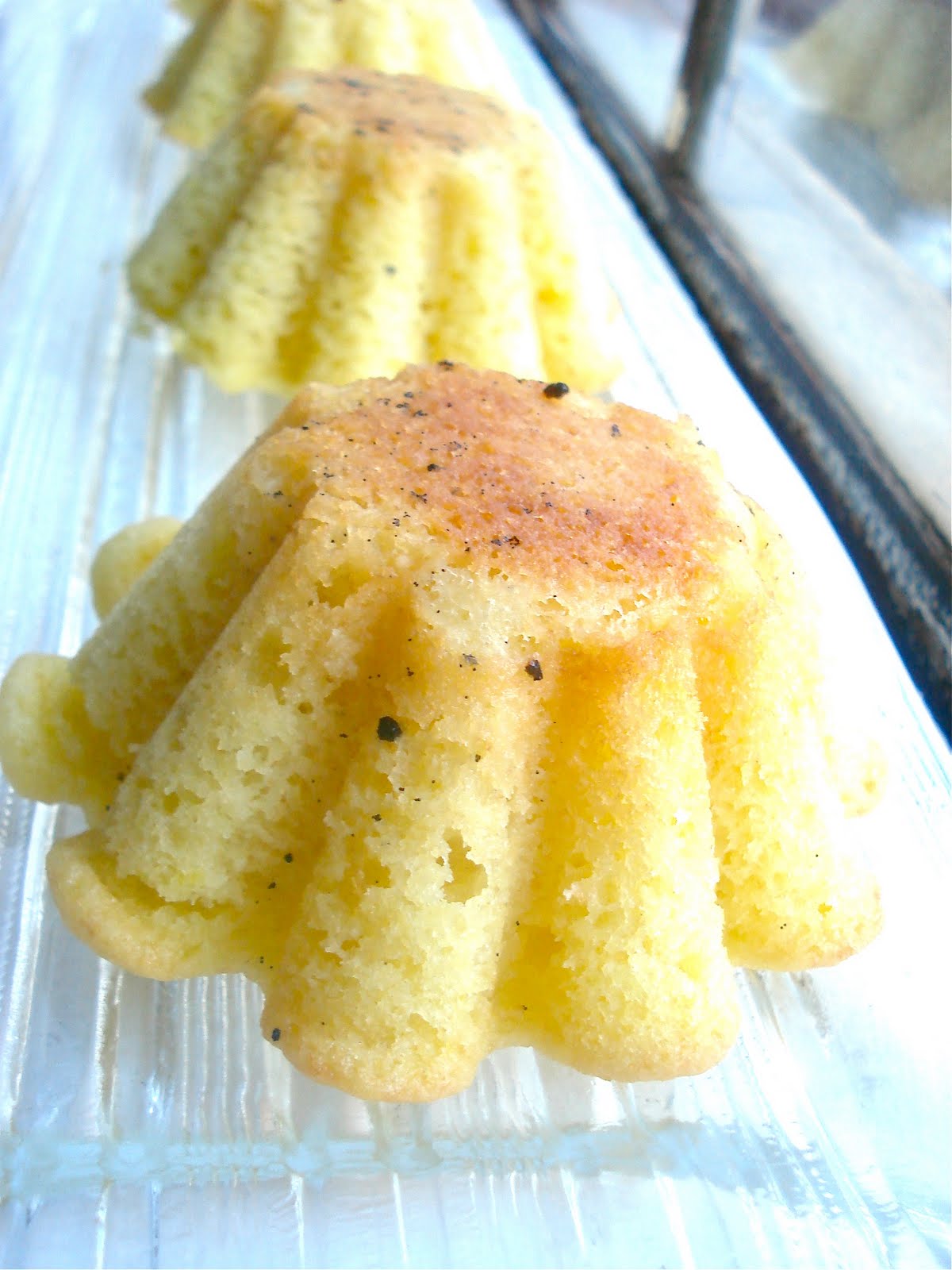
A slice of this cake will make your Saturday come early, on a Tuesday even—if you wish. I baked it well into the evening this Wednesday and once I unmolded it from the little brioche molds I bought at E.Dehillerin in Paris (and had not had the opportunity to use until just then), I knew it was going to be a day brightening kind of cake.

Mind you, this was not how I felt about an hour before, mixing the cake. When you add the oil—which the instructions have you do last—you will immediately feel that you’ve done something terribly wrong. You may clench your teeth. Or feel a migraine coming on. As you try to make sense of this oily, gloppy mess, you may all together question your mission.

You may think it was a terrible mistake. That you’re no good at cake making. That your decision-making, in general, has been pretty lackluster as of late. And, now that you mention it, you probably shouldn’t have bothered to get up that morning. In the most desperate of circumstances, you may even do a quick scan for a nearby bottle of brandy. Keep mixing. The oil will eventually stop resisting the batter and everything will smooth to a pale yellow. Breathe. Then bake.

When a lemon scent starts to engulf your kitchen, you’ll know you’ve almost made it. Your cake-made Saturday is right around the corner. The unmolding is the coup de grâce. The soaking of the syrup and the glazing that follows is cathartic.

A bite of the cake brings weightlessness. Things become clear and simple. And just like that, it’s Saturday morning, filled with hope. For a moment, there is cake, quiet, and lightness. You can almost hear Nick Drake croon “Saturday sun came early one morning. In a sky so clear and blue …”

You may choose to eat your gâteau au citron as the sun comes up, with a cup of coffee, or standing in your kitchen at midnight, licking its sticky lemon crumbs off your fingers. Either way, it’s Saturday morning—if only for a moment—and it’s lovely.

Gâteau au Citron
Adapted from Molly Wizenberg of Orangette

1.5 cups flour
2 tsp baking powder
Pinch of kosher salt
1 tbsp grated lemon zest
1/2 cup whole milk Greek yogurt
1 cup sugar
3 large eggs
1/2 cup olive oil
(plus butter for greasing)

Syrup
1/4 cup powdered sugar, sifted
1/4 cup fresh lemon juice
1 vanilla bean pod, split, seeds removed and added
Pinch of salt

Icing
1 cup powdered sugar, sifted
3 tbsp fresh lemon juice

Preheat the oven to 350 degrees. Very liberally grease individual molds, such as brioche molds, (or a 9-inch round cake pan) with butter. Line the bottom of your molds or pan with parchment paper and then grease the paper too with butter.

In a medium bowl, mix flour, baking powder, salt and zest. In a large bowl, mix yogurt, sugar and eggs until thoroughly combined; slowly mix in flour mixture until just combined. Add oil and continue to mix until it combines with the rest of the batter (this will take a little time and may seen slightly disheartening at first: continue, it will eventually come together).

Pour the batter into your greased molds or pan and bake for about 25-35 minutes; this will depend on the size of molds/pan you are using to bake you cake. Use a toothpick to test the cake in the center for doneness; the cake will be done when the toothpick comes out clean. (It may appear slightly underdone in the center, but the toothpick will come out clean when tested, so be sure to check.)

Let the cake cool on a wire rack for about 15 minutes; meanwhile, prepare the lemon syrup by combining the ingredients listed in a small bowl. Run a knife along the edges of your pan or molds, to assist in the unmolding. Coax out the cake and invert onto a wire rack (you should see the parchment paper side) that has been placed over a plate, baking sheet, or, strategically, over the kitchen sink. Remove the parchment paper. Spoon the syrup over the cakes, excess may drip down. Cool completely.

Up to 1 hour before serving, whisk together the icing ingredients and spoon over the cooled cake.

Serves about 10

Notes:
-I took this cake to a work staff meeting and it received rave, and I mean "best cake ever," reviews. I did get some strange looks assembling the icing in my office break room, prior to the meeting. (An especially odd occurrence given that I work in a nutrition office.) Just know that your icing ingredients are easily transportable. Have icing. Will travel. I made the cake and let the syrup soak in the night before and just tightly wrapped it; it was still plenty moist.

-My picture was pre-icing, but don't neglect it. The cake is tasty by itself, but the whole deal is something special.

-You ideally want to use organic lemons for this, as you'll be eating the peel. Depending on the size, you'll need about 6 or so.

-Don't skimp on the butter for greasing the pans, it will make your unmolding job so much easier.

-You can also freeze leftovers. Oh yes, you can.

-I highly suggest listening to "Saturday Sun" by Nick Drake, at any time of day. With cake? Even better.

2.25.2011

Down the Barley Soup Rabbit Hole

I’m late! I’m late! I’m late, for a very important date. Though I don’t have much time, I have enough to say that I think we are on the cusp of a rabbit explosion. Wait. Don’t go. Rabbits are not that scary: I promise. They’ve been, ahem, popping up all over the place. So go ahead, jump down the rabbit hole.

On the other side, you’ll find the likes of many notable Bostonians. Edible Boston recently ran a rabbit-friendly story. Barbara Lynch makes a braised rabbit pasta dish with olives and rosemary at Sportello. Toro serves up rabbit paté stuffed with pistachios. And Stoddard’s even does rabbit mousse.

While I realize this is not the context to convert the weary, I can say that rabbit tastes like the dark meat of chicken, but a little more of the earth. Consequently, it’s also less taxing on the environment. And though it was once considered peasant food, it ain’t cheap today. In fact, my rabbit cost me over 40 shekels, the beast. I scored some from Stillman’s Farm at the winter farmers' market in Somerville: it was worth every penny. The meals it made practically fell into my kitchen.

I decided to braise this rabbit similarly to the way I braise short ribs, mainly because I had some leftover port. So after I had a nice crust on the meat, into the pot went diced carrots, tomatoes, garlic, onions, fresh oregano, rosemary and port. A few hours later, some low and slow cooking turned out braised rabbit that fell nicely off the bone. The saucy rabbit then made for a wonderful base, atop a whole wheat pizza crust, with fresh mozzarella from Fiore Di Nonno (also from the winter market) and ricotta, along with some more fresh oregano. Next, came a stock out of the rabbit carcass, in the exact fashion of making chicken stock, and voilà: rabbit soup.

Down, down, down the rabbit hole I went. And I don’t think I’ll be coming back. Turns out, rabbit is as versatile as it is fecund.

So, in typical fashion (oh my ears and whiskers!), the rabbit is at it again. Prolifically giving life to many dishes and rapidly spreading throughout the menus of Boston, as well as becoming a welcome addition to my kitchen.

Rabbit Barley Soup

2 tbsp olive oil
1 onion
3 garlic cloves, minced
4 carrots, peeled and diced
8 cups rabbit stock (or chicken stock; both can be made with the carcass, in the same manner)
~1 sprig rosemary
~2 sprigs oregano
Salt and pepper
14 oz can chopped tomatoes
1/2 cup uncooked barley

Saute the onion, garlic and carrots with olive oil in a large stock pot. Add in stock and herbs. Season with salt and pepper. Let simmer about 20 minutes. Add tomatoes and uncooked barley and cook for about 60 minutes more, or until barley is fully cooked. Adjust for seasoning, as needed.

Makes ~ 2 quarts

Notes:
-This is a great leftover dish if you have some remaining rabbit to use up. I added ~1 cup braised rabbit meat to the soup and and am happily awaiting rabbit soup leftovers in my freezer.

-This is a recipe open to interpretation. It can easily be substituted for chicken.

2.17.2011

Yogurt Seduced By Chocolate

Life is full of the unexpected. It’s lovely when you peel off the sunset tangerine skin of an orange to reveal deep garnet flesh, signaling that your fruit is actually a blood orange. Pulling off your covers at 6 am to reveal that your apartment is 53 degrees and has an improperly working shower water heater is not the stuff of sunsets and gemstones. But that's life. I try not to dwell.

I’ve grown accustom to this dichotomy and have developed, what some may deem, an unusual sense of humor because of it. This week, I chuckled when I noticed my grocery shopping list included bittersweet chocolate, cocoa powder, and Draino. Revealing that I am either a woman on the verge—deciding whether to turn towards cacao or sodium hypochlorite—or a lady with a clogged drain that loves chocolate. Luckily, today I am the latter.

Which leads me to the ultimate unexpected chocolate delicacy: chocolate yogurt. I've made it many times and it never ceases to impress and delight. It's really more like chocolate pudding masquerading as yogurt. You could even go so far as to say it is a yogurt that’s been sexed up, like it’s wearing strands of pearls and red panties.

It could be argued this yogurt comes to the table with its seductive accessories a few days late, given that we’ve passed Valentine’s Day. But even if you think you've had your fill of cacao (mon dieu!), the chocolate in this yogurt is subtle, light, and refreshing.

At the moment, I can’t think of anything quite like making homemade chocolate sauce to fold into milk and then warm overnight into yogurt. The yogurt sets to pale brown, with a luscious cream layer on top and a thicker chocolate layer at the bottom. And just like red panties—really now—is there ever actually a bad time for chocolate? Especially when it’s not expected.

Chocolate Yogurt

3 3/4 cups 2% milk
1/2 cup unsweetened cocoa
1/2 cup sugar
1/4 cup half and half
1/3 cup coffee
6 oz 2% Greek yogurt
1/4 cup maple syrup, or more to taste

Heat milk in a medium saucepan until it boils, whisking occasionally. Remove from heat and let cool until lukewarm (about 90 degrees). In another pan, while milk is heating, combine cocoa, sugar, half and half and coffee and whisk on medium heat until smooth and glossy (it will look like chocolate syrup). Set aside until milk has cooled. If the chocolate sauce sits too long and starts to harden, simply warm it slightly again, though you don't want the sauce to be too hot because you'll eventually be adding it to your yogurt and your lukewarm milk.

Whisk the Greek yogurt into your chocolate sauce and then add to your milk. Add maple syrup and whisk until combined. At this stage, you may want to taste to make sure your yogurt is sweet enough; simply add more maple syrup as needed.

Pour the yogurt mixture into 6 oz glass jars (without their tops) and then into a yogurt maker for 12 hours (it will look soupy). Refrigerate before eating.

Makes about 7-6 oz jars.

Notes
-Alas, you need a yogurt maker for this. While not normally a fan of specialty gadgets (one has to be choosy when living in a studio apartment), I love my yogurt maker and use it more than I ever thought I would. It's from Williams-Sonoma (and Euro Cuisine is the brand).

-Yes, technically you are using yogurt to make yogurt. But you need to get your cultures somehow (and this is the easy way). Greek yogurt adds nice body. Having a little fat helps too.

-I've used honey instead of maple syrup and it also works well.

-This does require some planning. I usually try to make it a few hours before I go to bed.

-I like the intense chocolate flavor non-alkalized cocoa powder provides, so that's what I tend to use.

2.10.2011

The Adult Side of Molasses Cookies

Ah the classic comfort of cookies and … a good beer. In the words of Arnold Schwarzenegger: “milk is for babies, when you grow up you have to drink beer.” And with that, I suppose I should start from the beginning …

I am always in search of good recipes from local restaurants. And Maura Kilpatrick, pastry chef of Oleana and Sofra Bakery and Cafe, has yet to let me down. Consequently, her spicy molasses cookies are perfection. They are crispy and chewy, with enough spice to remind you that the molasses cookie is a cookie that means business.

I'm quite serious when it comes to molasses. I like to use blackstrap; it’s earthy and slightly bitter. It's also a good source of iron. (Try to rationalize yourself out of a cookie that will make you stronger the more you eat it: I dare you.) Perhaps it’s the 80 year-old woman in me, but I love molasses cookies; they seem equal parts medicinal and decadent. But whereas grandma might pour you a nice glass of milk to wash yours down, I’ll offer up beer instead.

It may sound like an odd combination but these spicy, saucy little numbers can take the booze. And while I don’t tend to keep gallons of milk in my fridge, I do keep beer. And I did have a growler of Harpoon UFO in there. (A gal’s gotta have a port in the storm.) So Sunday I took my—not for the meek—molasses cookies and my handle of beer and headed off to a Super Bowl party. (When you are up against hot wings, you really have to bring it.) The citrusy orange notes in the UFO worked off the spices in the cookie. As did the fruitiness of the Magic Hat #9, that followed.

I thought I was really on to something. It turns out, this combination of beer and molasses is not a new one. The sticky stuff actually landed itself in George Washington's beer making recipe. Our first President was really on to something, apparently.

So, will I go out on a ledge and say that beer compliments molasses cookies better than milk? Yes, I think I will. Especially, if I am in the company of one beer-swilling Washington. This is a grownup molasses cookie that needs something adult to hang with. This is a cookie with personality, perhaps the Schwarzenegger of cookies. They are not to be missed. You might even find yourself echoing, “I’ll be back.” Especially, if there is a good beer involved.

Spiced Molasses Cookies with Candied Ginger
Adapted from Sofra Bakery & Cafe

2 cups flour
2 tsp baking soda
1/2 tsp kosher salt
1 tsp cinnamon
1/2 tsp nutmeg, freshly grated if possible
1/2 tsp cloves, freshly ground if possible
pinch of ground ginger
3/4 cup canola oil
1/4 cup blackstrap molasses
1 cup sugar, plus an additional ~1/4 cup before the cookies are baked
1 large egg
~3 tbsp finely diced candied ginger

Combine flour, baking soda, salt and spices in a bowl. In the bowl of a mixer, combine oil, molasses, sugar and egg and beat with paddle attachment for about 15-20 seconds, until well combined, but not too airy. Slowly add dry ingredients into the wet ingredients and mix until just combined. Mix in candied ginger by hand (this also helps to ensure the dry and wet ingredients are fully combined).

Chill the dough for 2 hours and allow to come to room temperature before baking. Preheat oven to 350 degrees. Place parchment paper on a cookie sheet. Use a small ice cream scoop or melon baller to scoop the dough (about 1 tbsp or so) and then roll dough into a small ball with you hands and lightly coat about about 1/2 of the ball by rolling it in a bowl with ~1/4 cup sugar.

Place onto a cookie sheet and bake for about 12 minutes. (They will appear undercooked, but will continue to set as they cool).

Makes about 3 dozen

Notes:
-I am a sucker for cloves, and I ground them with a mortar and pestle just before adding them in. Just lovely.

-In addition to iron, blackstrap molasses also has calcium, potassium and magnesium. Oh, and it's delicious.

-These cookies will really spread as they cook, so be sure to space them far enough apart on your cookie sheet, between 9-12 cookies per sheet worked for me.